





What Makes A Door Ding Different
A door ding is the ideal candidate for paintless dent repair. It is usually a small, sharp impact under an inch across, where the metal is displaced but the factory paint stays fully intact. Most door dings are cosmetic panel dents, not collision damage. They tend to be shallow, isolated, and limited to the outer skin of the door, which is exactly the kind of damage PDR was designed to remove without sanding, fillers, or repainting.
That intact paint is the whole reason PDR works so well here. Factory automotive paint is engineered to flex. It is baked onto the panel and bends with the metal far more than most people expect. During a repair, our technicians massage the metal back into shape with small, controlled presses, well within what the finish is built to handle. Because the impact was minor and the paint was never broken, there is simply no need to introduce filler or new color.
How PDR Compares To A Repaint
Conventional dent repair works the metal, fills the low spot, sands it flat, then repaints and blends the panel. That traditional process is far more time consuming, labor intensive, and expensive than PDR. Every one of those steps introduces material layers and color matching that a clean door ding never actually requires. When the original finish can stay untouched, all of that added work simply disappears.
A high quality repaint can still look very good on day one. The problem shows up later. You will never get new paint to match the factory finish exactly, and even when it looks good right away, the different applications fade at different rates over a few years. PDR preserves the factory paint and eliminates that color mismatch entirely, so the panel still looks correct from every angle years down the road.
There is also the corrosion angle that many drivers overlook. The original baked on finish protects the panel from rust, and disturbing it with sanding and repainting means rebuilding that protection by hand. That is why many auto experts now call PDR the gold standard for minor body damage. It restores the panel while preserving both the appearance and the built in corrosion protection the factory already gave you.
The Speed And Convenience Advantage
One of the biggest benefits of PDR is speed. Most single, straightforward door dings can be repaired with precision in around an hour, and typically fall in the 30 to 90 minute range. There is no filler curing overnight and no waiting on paint to dry and blend across the panel.
That means a few dents often finish the same day. Compare that to a body shop, where the same repair can stretch across days or even weeks. Parts ordering, primer and paint curing, and careful color matching all add time. For a cosmetic ding, that is a lot of downtime for what should be a quick fix.
Because our approach is mobile, we can also come to your home, office, or a dealership lot rather than tying up your schedule. Dealerships lean on this exact convenience to keep pre owned inventory looking clean without stacking up big paint bills or long listing delays. The same swift, on location service works just as well for individual drivers.
Keeping your original paint does more than save time, it protects what your vehicle is worth. Buyers and appraisers often prefer factory panels over repaired and repainted ones, even when the cosmetic result of a repaint is genuinely strong. A body shop achieves a similar look with filler and paint, but repainted panels get flagged at trade in and at auto auctions. When you preserve the factory finish through PDR, there is nothing to explain and nothing that reads as prior body work when it counts most.
There is also the record itself. Paintless dent repair is not a reportable event. It generates no paint work that would flag during a pre purchase inspection, no shop invoice that triggers a vehicle history entry, and no insurance claim unless you choose to file one. Your history report stays clean. That matters especially in Texas, where insurers track claims aggressively and are quick with subrogation. During major storms, hundreds of vehicles pick up history entries at once, and clean record PDR keeps yours out of that pile.
How The PDR Process Actually Works
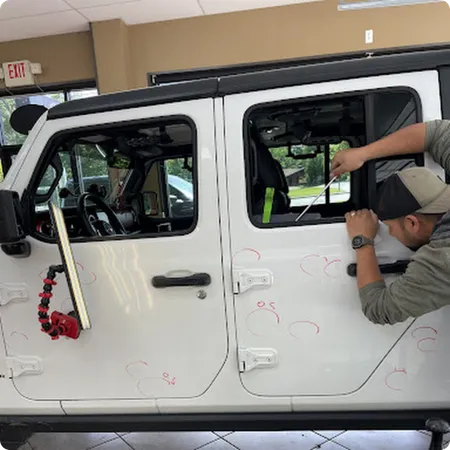
Every repair starts with an honest assessment. Our technician examines the panel under natural light and specialized PDR lighting to catch low spots the naked eye would miss. The goal is to learn how big the dent is, how it can be accessed, and whether pure PDR is genuinely the right call before any tool touches the metal.
Next comes access. We reach the back side of the dent using push rods with various tips, or reach tight interior spaces with whale tail tools built for door panels. Modern doors with side impact beams require strategic tool placement, and some vehicles need the window regulator temporarily lowered for proper access. For panels with no backside access, we apply glue tabs to the exterior and pull carefully.
The finishing work is where reading skill matters. Our technician watches the reflection move across the panel, corrects low spots in small controlled presses, and blends the surrounding texture so the result looks natural from multiple angles. A final inspection under the same lights confirms the metal is right. One thing we never do is drill holes to reach a dent, because that damage stays with your vehicle.
When PDR Is Not The Answer
We tell people the truth: PDR has limits, and pretending otherwise helps no one. If the paint is cracked or chipped at the impact point, that finish is already compromised and pure PDR alone may not be the right approach. A trained technician reads the paint before starting, every time.
Certain conditions push a ding out of PDR territory. Sharp impacts where the metal may be pinched or overstressed, damage right at a door edge, hidden reinforcement that blocks tool access, and any panel with previous repaint work all change the plan. Metal that has been stretched past its elastic limit cannot simply be pressed flat again.
When paint is cracked, edges are kinked, or there is structural damage, a body shop with filler, primer, and refinishing is genuinely the better route. In some complex cases, PDR still plays a role by prepping a panel before paint, a hybrid push to paint approach. We will always point you to the right method rather than force a repair.
It is worth resisting the temptation to fix a ding yourself. PDR is a specialized technique that depends on specific tools, controlled pressure, and years of hands on experience reading how a given panel and finish will respond. The do it yourself kits on the market look simple, but attempting the process without that knowledge rarely yields professional results, and it is easy to overstretch the metal or stress the paint to the point where a clean PDR fix is no longer possible at all.
That is also why credentials matter when you choose a shop. Look for I CAR trained PDR technicians, manufacturer specific certification for aluminum work, insurance approvals, and verifiable years of real experience. Industry standards from bodies like the National Alliance of Paintless Dent Repair Technicians exist precisely because proper assessment and execution protect your vehicle's integrity. The paint must stay uncracked and minimally stressed, and the metal must stay within its elastic limit, for the repair to hold up over time.
Door Ding PDR Questions Answered
Does insurance cover door ding repair in Texas? In many cases, yes. Hit and run door ding damage is covered under Texas policies, and all major insurance companies approve paintless dent repair. Many actually prefer it, because PDR reduces claim costs while preserving the vehicle's original finish and overall value. If you would rather keep your history report clean, you can also simply handle a minor ding without filing at all.
How long does a door ding take? Most single, straightforward door dings are repaired in around 30 to 90 minutes, and a handful of dents often finish the same day. Larger jobs like hail damage can run multi day, but a typical isolated ding is quick. As a general guide, dents longer than about five inches may fall outside what PDR can address and warrant a different repair path.
Will a PDR repair show up on my vehicle history? Not on its own. With no filling, sanding, or painting involved, PDR generates no paint work to flag on a pre purchase inspection and no shop record that triggers a history entry, unless an insurance claim is filed on the damage. That clean record advantage is one of the biggest reasons PDR beats a body shop for a simple door ding.