





Paintless Dent Repair, Simply Explained
Walking into your first paintless dent repair appointment feels less intimidating once you understand the process. At Precise Dent Repair, we remove dents by carefully pushing and pulling on your factory finish, restoring the panel to its original state without fillers, sanding, or repainting. That means your vehicle keeps its original paint, which matters for both appearance and long term value. There is no color matching and no downtime waiting for paint to cure.
PDR is not a new invention. The technique first gained traction in Europe on automobile production lines back in the 1940s, then spread across the United States in the 1980s as a faster, more affordable way to remove dings and dents. Today, every major insurance company recognizes paintless dent repair as the standard, best practice method for hail damage. When your paint is intact, PDR is almost always the smartest first option to explore.
The Five Step PDR Process
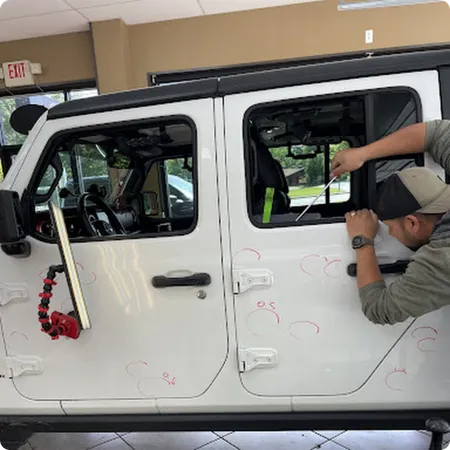
Every appointment starts with a detailed inspection. Our technicians examine the dent's size, depth, and location to decide whether the metal can be restored without harming the paint. We look closely for cracking, bubbling, or stress marks in the finish. Using LED inspection lights and reflective boards, we view the panel from multiple angles so shadows reveal exactly how deep or stretched the metal really is.
Next comes panel access. We locate the best point behind the dent, which sometimes means carefully removing trim pieces, inner panels, headlights, or tail lights to reach the backside safely. Once access is set, we reshape the metal using specialized rods and body picks, applying gentle, controlled pressure. Rather than forcing the dent out in one motion, we make hundreds of tiny adjustments to gradually restore the original contour.
When rear access is not possible, we use glue pulling. A specialized tab and pulling tool gently lift the dent from the exterior until the panel regains its shape, then the glue is safely removed without harming the paint. This technique is especially useful for reinforced panels and hard to reach areas. Finally, we perform a quality inspection under special lighting, then wash and detail the vehicle before returning it to you.
How Long Will It Take?
One of the biggest advantages of PDR is speed. Because we reshape metal without sanding, filling, or repainting, many repairs move from estimate to completion in a matter of hours rather than days. There is no waiting for paint booths, primer, or drying time, which keeps you back on the road quickly and with far less disruption to your schedule.
Small dents, like a single door ding, are often handled in thirty minutes to a few hours. Larger jobs, especially hail claims covering multiple panels, may take one to three days depending on the number and severity of the dents. We give you a realistic timeline at your inspection so you know exactly what to plan for.
Dent age and metal type also influence the pace. Fresh dents tend to release more easily than older damage where stress patterns have set in. Aluminum panels resist reshaping more aggressively than steel and require slower, more graduated pressure, so we adjust our approach and tools to match your vehicle's specific material and construction.
Before your appointment, a little preparation goes a long way. Snapping a few clear photos of the damage helps us plan ahead. Try to capture the panel involved, how many dents you can see, and note whether the damage came from hail, a parking lot impact, a runaway shopping cart, or something else. Good photos let us estimate tool access, appointment length, and whether mobile service is realistic for your situation. A clean panel also helps, since dirt and grime can hide smaller dings during inspection and skew the initial assessment.
You do not need to do anything to the paint itself, and please do not attempt any DIY pull kits or heat and dry ice tricks beforehand. Those methods can stretch the metal or crack the finish, which may push an otherwise simple repair into conventional bodywork. If your damage is hail related and you plan to use insurance, bring your policy details and claim number so we can coordinate the estimate. Arriving with this information ready means we can move straight into a thorough assessment and give you accurate answers on the same visit.
Are You a Good PDR Candidate?
PDR works best when your paint is fully intact and the dent has not stretched the metal too severely. That makes it ideal for hail damage and everyday door dings, which are exactly the situations we see most. Five factors decide whether a dent qualifies: its size, its depth, whether the paint is undamaged, its location on the panel, and whether we have tool access behind it.
Most dents up to roughly the size of a grapefruit are excellent candidates, and we can work on both steel and aluminum body panels. Newer vehicles with flexible modern paint systems typically respond better than older cars with brittle or previously damaged finishes. If you are curious whether your specific dent fits, the honest answer usually comes from a hands on inspection under proper lighting rather than a photo alone.
Many owners come to us before selling or trading in a vehicle, since cosmetic dents affect resale presentation even when the car runs perfectly. Because PDR preserves the original factory finish, it also helps avoid concerns about repaint history or prior cosmetic work. Keeping your original paint intact protects both the look of your vehicle and its value at trade in time.
When PDR Is Not the Answer
We believe in setting honest expectations. PDR will not work well when a dent has cracked paint, a sharp crease, panel edge damage, or blocked backside access. It also only applies to metal body parts, so plastic bumpers, fenders, and other non metal components fall outside what paintless techniques can address and need traditional repair.
Metal stretch is another real limitation. Deep dents from collisions or heavy impacts can permanently alter the surface tension, meaning the panel cannot fully return to its original shape with PDR tools alone. Previous body filler or prior paint work in the same area can also limit our ability to work the metal effectively, so we always check the history of a panel first.
PDR is a cosmetic repair, not a structural one. It cannot straighten bent frames, realign panels, or fix damage that affects safety or performance. Certain high strength safety cage areas built from ultra high strength steel or boron are designated no repair zones. If your damage falls into any of these categories, we will tell you plainly and point you toward the right solution.
If your dents came from a Texas hailstorm, you have important rights worth knowing. Hail damage is typically covered under the comprehensive portion of your auto insurance policy, which handles weather related events. Under Texas law, you have the legal right to choose any repair shop you trust, even if your insurance company recommends a specific facility. Do not feel pressured into a preferred network. You get to decide who works on your vehicle, and we are happy to work directly with your insurer throughout the claim.
Keep in mind that the first estimate is rarely the final word. Once repairs begin, additional damage sometimes becomes visible, part prices can shift, or extra procedures prove necessary. These changes are handled through supplements, which are formal updates to the original estimate submitted to your insurance for approval. This is a normal, routine part of hail claims, not a red flag. We document everything clearly so the repair is completed properly and your insurer has what they need to approve it.
Choosing a Technician You Can Trust
The quality of a paintless dent repair depends heavily on the person holding the tools. Patience and experience are everything at the reshaping stage, because too much force in the wrong spot creates high spots and can damage the paint. Skilled technicians rely on years of hands on practice to sense exactly how much pressure a specific panel and metal type can take, adjusting push by push until the contour is right.
When choosing a shop, look for technicians who have completed certified training programs. Certifications from recognized PDR organizations show a commitment to industry standards and prove the work is being done to a professional level. Ask about experience with your vehicle's material, since aluminum demands different tools and a slower touch than steel. A confident shop will happily explain their process and walk you through what they see during your inspection.
Done correctly, PDR leaves no evidence that a dent ever existed and does not void your manufacturer's paint warranty, because the factory finish is never disturbed. A simple repaired dent also does not automatically appear on a vehicle history report. At Precise Dent Repair, we finish every job with a careful quality inspection under reflective lighting, then wash and detail your vehicle so it leaves looking exactly as it should.