




PDR vs Traditional Body Shops
How Paintless Dent Repair Differs From Traditional Body Shop Work

FSDAVCFEBFEVSDDVFSD

FSDAVCFEBFEVSDDVFSD

FSDAVCFEBFEVSDDVFSD
Two Very Different Approaches to Fixing Dents
Paintless dent repair and traditional body shop repair are two very different approaches to fixing a damaged vehicle, and the difference matters more than most car owners realize. Traditional body shops often fill dents with body filler, sand them down, and repaint the panel. That process can work well for severe damage, but it comes with real trade-offs, including longer repair times, higher costs, and paint that may not perfectly match the original factory finish over time.
Paintless dent repair takes a different path entirely. A trained technician works from behind or around the damaged panel, using specialized tools to carefully push and massage the metal back to its original shape. No filler is used, no paint is applied, and the factory finish your vehicle came with stays completely intact. For dents that have not broken the paint surface, this method is typically faster, more affordable, and better for the long-term condition of your vehicle.
Two Very Different Approaches to Fixing Dents
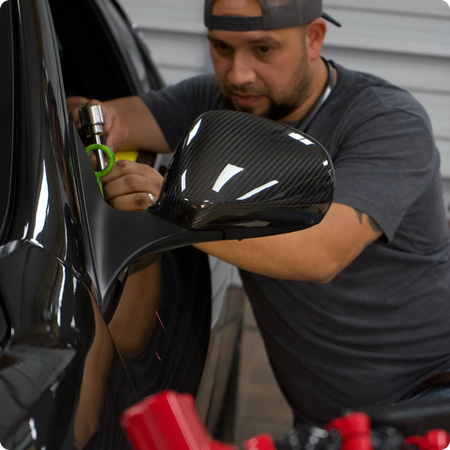
Paintless dent repair and traditional body shop repair are two very different approaches to fixing a damaged vehicle, and the difference matters more than most car owners realize. Traditional body shops often fill dents with body filler, sand them down, and repaint the panel. That process can work well for severe damage, but it comes with real trade-offs, including longer repair times, higher costs, and paint that may not perfectly match the original factory finish over time.
Paintless dent repair takes a different path entirely. A trained technician works from behind or around the damaged panel, using specialized tools to carefully push and massage the metal back to its original shape. No filler is used, no paint is applied, and the factory finish your vehicle came with stays completely intact. For dents that have not broken the paint surface, this method is typically faster, more affordable, and better for the long-term condition of your vehicle.
What Actually Happens During Each Repair Process
At a traditional body shop, the repair process starts by sanding down the damaged area to bare metal. A technician then applies body filler to build the surface back up, sands it smooth, and sprays primer before painting. That paint is blended to match as closely as possible, but it is rarely a perfect match, especially on older vehicles where the original paint has faded slightly over time. The panel often ends up slightly different in color or texture from the rest of the car.
Paintless dent repair skips all of that. A trained technician works from behind or around the panel using metal rods and specialized tools to slowly work the dent outward. The process takes patience and skill, but when done correctly, the metal returns to its original position without touching the paint at all.
The result with PDR is that your vehicle keeps the exact paint it left the factory with. That matters more than most people realize. Factory paint has a uniform depth and finish that repainted panels can never fully replicate. Keeping that finish intact also helps protect long-term resale value in ways that a repainted panel cannot.
Why Factory Paint Matters More Than You Think
Car buyers and appraisers pay close attention to paint condition. When a vehicle goes through a paint history check or an in-person inspection, repainted panels stand out. Even a professional repaint job shows up under certain lighting, and it can signal prior damage to anyone looking closely. That alone can reduce what a buyer is willing to pay.
With paintless dent repair, there is no paint history to worry about. The repair leaves the vehicle in factory condition, which means it holds up better at trade-in, private sale, or insurance appraisal. For vehicles that are leased or financed, this can also mean avoiding penalty charges tied to visible panel damage or non-factory finishes.
Paint is also a protective layer. Every time a panel gets sanded and repainted, there is some risk to the surrounding factory finish. With PDR, the surrounding paint is never disturbed, which means the protective coating remains fully intact across the entire panel.
Why Factory Paint Matters More Than You Think
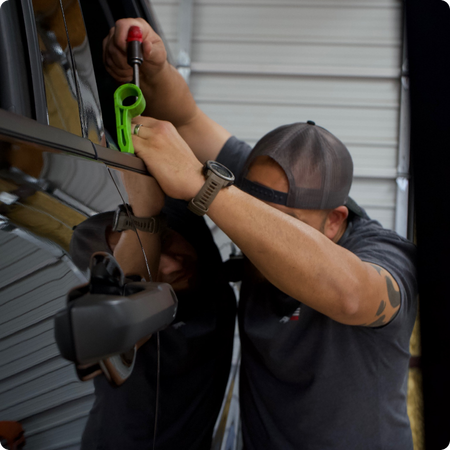
Car buyers and appraisers pay close attention to paint condition. When a vehicle goes through a paint history check or an in-person inspection, repainted panels stand out. Even a professional repaint job shows up under certain lighting, and it can signal prior damage to anyone looking closely. That alone can reduce what a buyer is willing to pay.
With paintless dent repair, there is no paint history to worry about. The repair leaves the vehicle in factory condition, which means it holds up better at trade-in, private sale, or insurance appraisal. For vehicles that are leased or financed, this can also mean avoiding penalty charges tied to visible panel damage or non-factory finishes.
Paint is also a protective layer. Every time a panel gets sanded and repainted, there is some risk to the surrounding factory finish. With PDR, the surrounding paint is never disturbed, which means the protective coating remains fully intact across the entire panel.
The size and depth of a dent play a big role in which repair method is appropriate. Most common dents, including parking lot dings, minor creases, and hail damage, are good candidates for paintless dent repair as long as the paint has not cracked or chipped. When the metal is only slightly deformed and the finish is still solid, a skilled technician can usually restore the panel without any paint work at all.
Traditional body shop repair becomes necessary when the damage is severe enough to crack the paint, when the metal is stretched beyond what PDR tools can address, or when rust has started forming inside a dent. Those situations require a more involved repair, and a body shop is the right call. However, most everyday dents that people assume need a body shop are actually well within the range of what paintless dent repair handles effectively.
Cost Differences Between PDR and Body Shop Repairs
One of the most common concerns car owners have is whether their paint will still match after a repair. With traditional body shop work, matching paint is genuinely difficult. Even the best painters acknowledge that color matching is not an exact science, and subtle differences in shade, texture, or sheen can show up over time, especially as the original paint ages. That risk simply does not exist with paintless dent repair because no paint is involved at all.
The factory finish on your vehicle was applied under controlled conditions with precise equipment that no local shop can fully replicate. When a body shop repaints a panel, the new paint is slightly different from the start, and that gap often becomes more visible as years pass. Keeping your original paint is not just a cosmetic preference. It is a practical way to protect your vehicle's value.
Insurance companies also take note of prior repairs. A vehicle that has been repainted in sections may raise questions during future claims or appraisals. Paintless dent repair leaves no record of repainting because there is nothing to record. The panel looks the way it did before the damage, with the same factory paint that has been on the vehicle since it was built.
Turnaround Time and Convenience for Vehicle Owners
Not every dent qualifies for paintless repair, and knowing the difference helps you set realistic expectations before you bring your vehicle in. The two main factors technicians assess are the condition of the paint and the depth and shape of the dent. If the paint is cracked, chipped, or scraped at the point of impact, the metal underneath has usually been stressed beyond what PDR can fully correct without some additional surface work.
Dent depth and shape also matter. Shallow dents with gradual edges respond very well to paintless repair. Deep, sharp dents, especially those caused by direct impacts from hard objects, may have stretched or creased the metal in ways that limit how fully it can be restored using this method alone.
Most hail damage, door dings, and minor parking lot dents fall well within the range where paintless repair works effectively. A quick look by an experienced technician is usually all it takes to confirm whether your specific damage is a good candidate.
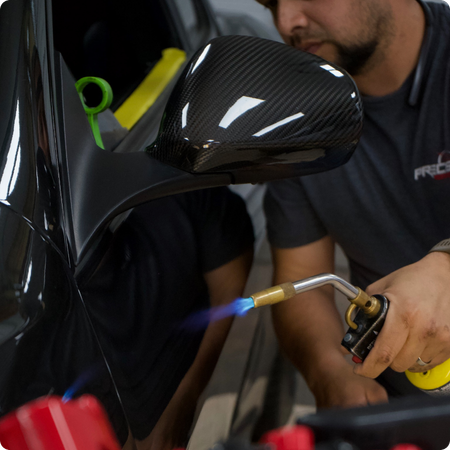
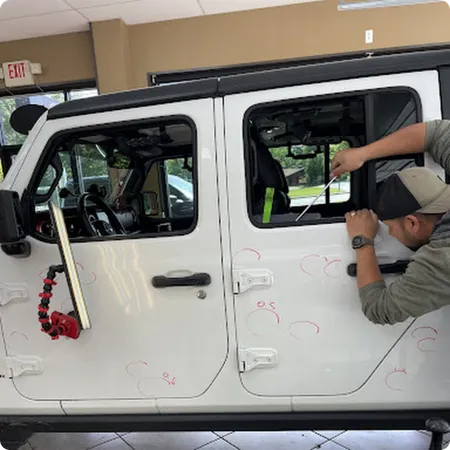
When you bring your vehicle in, the technician will look at the dent from multiple angles, often using a light board or reflection tool to see the shape and depth of the damage clearly. This inspection takes only a few minutes but gives a much more accurate picture than a casual visual check. You will know before any work starts whether paintless repair is the right fit.
If the damage turns out to be more involved than it first appeared, a good technician will tell you honestly and explain what your options are. There is no benefit to attempting a repair that will not produce a clean result. The goal is always a panel that looks the way it did before the damage occurred, and that standard guides every decision made during the assessment and the repair itself. Straightforward communication is part of doing the job right.
Choosing the Right Repair Method for Your Car
Paintless dent repair is not the right tool for every situation, but for the damage types it handles well, it is genuinely the better choice. It preserves your factory paint, costs less than traditional body work, and gets your vehicle back to you faster. Those are not small advantages. They represent real value for anyone who wants a quality repair without the complications that come with repainting.
Understanding how PDR differs from traditional body shop repair also helps you ask better questions when you are getting an estimate. If a shop immediately reaches for filler and paint on a dent that has not broken the surface, it is worth asking why. Many dents that look significant are actually strong candidates for paintless repair, and knowing that gives you more options.
Our team at Precise Dent Repair is glad to take a look at your vehicle and give you a straight answer about what approach makes the most sense. Reach out to schedule a time, and we will walk you through exactly what we see and what the repair process would involve for your specific damage.
Precise Dent Repair
Paintless Dent Repair & Vehicle Hail Repair
Stay Current on Dent Repair
Get new articles on paintless dent repair and hail damage delivered straight to your inbox.
Stay Current on Dent Repair
Get new articles on paintless dent repair and hail damage delivered straight to your inbox.
Contact Info
Service Hours
Social Media
Mon-Fri: 8:00AM - 5:00PM
Saturday: Closed
Sunday: Closed



Licensed & Insured
Connect With Our Socials
Contact Info
Service Hours
Mon-Fri: 8:00AM - 5:00PM
Saturday: Closed
Sunday: Closed
Social Media
Licensed & Insured
©2026 Precise Dent Repair
Powered by: Customers Plus
Powered by: Customers Plus
Powered by: Customers Plus