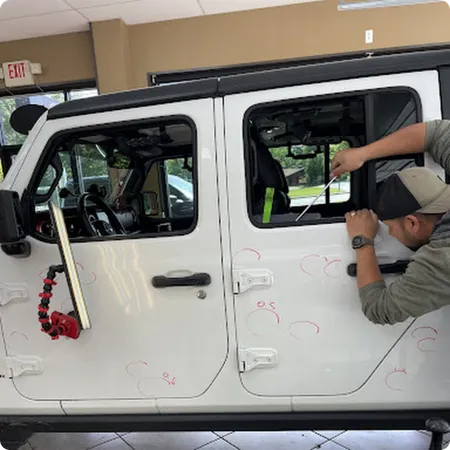






Why Texas Hail Threatens Your Value
If you own a vehicle in Texas, hail is not a distant possibility. Texas leads the nation in severe hail events, and North Texas cities like Dallas, Fort Worth, and Wichita Falls sit squarely in Hail Alley. The most active stretch runs March through June, with a secondary fall peak when warm and cold air masses collide. Storms here are frequent, and they are increasing year over year.
The numbers tell the story plainly. Texas recorded 529 hail events in 2024, a striking jump from the prior year, and the state generates more hail damage claims than any other. When millions of claims are processed nationwide in just a few years, and Texas sits at the top of that list, the question is not whether your vehicle will face hail. It is how well you protect its value when it does.
What Unrepaired Hail Costs You
Unrepaired hail damage typically pulls resale value down by 10 to 30 percent depending on severity. Those small rounded dents scattered across a hood, roof, trunk lid, and upper door panels are the first thing a buyer sees. First impressions turn into offer prices fast, and visible cosmetic flaws rarely earn the benefit of the doubt.
There is a psychological weight here too. Buyers tend to assume that visible dents point to broader neglect, even when the vehicle runs perfectly. That snap judgment costs you at the negotiating table. A car with an untouched hail pattern signals deferred maintenance, and shoppers price that assumption directly into what they are willing to pay for your vehicle.
Dealers are no gentler. When you bring a hail damaged vehicle in for a trade, appraisers factor in repair costs, longer lot time, and slower resale. They frequently deduct more than the actual repair would cost, because they need to cover the work before they can move the car again. That gap comes straight out of your pocket.
Why PDR Preserves More Value
The repair method makes the biggest difference. Paintless Dent Repair keeps your factory paint fully intact, which means far less diminished value than traditional bodywork that requires repainting panels. Factory paint is applied in a controlled environment that independent shops cannot replicate exactly, and preserving it is what protects your resale position.
In 2026, buyers and appraisers place real weight on original factory paint. Modern scanning tools and trained appraisers can detect color inconsistencies and paint thickness variations, which triggers a repainted panel flag that further reduces value. PDR sidesteps this problem entirely, leaving no mismatched paint and no detectable repair work behind.
The results speak clearly. Vehicles that undergo professional paintless dent repair typically show little to no sign of previous hail damage. When performed by certified technicians under ideal conditions, PDR consistently delivers strong effectiveness on qualifying dents, restoring the panel to its original shape while your manufacturer paint warranty stays fully valid.
The Carfax question comes up often, and the nuance matters enormously. Paintless dent repair itself does not automatically appear on a vehicle history report simply because a dent was repaired. Panels corrected with PDR do not generate a Carfax entry. Only panels sent to a body shop for replacement do, and even then the record shows a single panel replacement rather than a full vehicle body shop job, which carries a far smaller resale impact. Keeping the work in the PDR lane keeps your history clean.
When a comprehensive claim is filed, it may be reported to databases like Carfax and AutoCheck, but the wording carries weight. A notation reading Hail Damage Repaired reads very differently from Accident or Collision Damage. The former signals a weather event with a clean repair. The latter raises questions about structural integrity. Hail claims are typically only reported to Carfax if the vehicle is totaled, meaning the repair cost exceeds its value. Choosing PDR helps you avoid that outcome entirely and keeps your report honest and reassuring.
Why Delaying Repairs Backfires
One of the most common mistakes owners make after a storm is postponing repairs. The damage may look purely superficial, but leaving dents unaddressed invites bigger problems. When hail cracks or chips the paint, moisture seeps through, and that leads to rust and corrosion. What began as a cosmetic issue quietly becomes a structural and mechanical one over time.
Timing also affects the repair itself. Dents are easiest to treat when the surrounding paint and metal remain stable and elastic. Act promptly and the metal responds cleanly to the PDR process. Wait too long and underlying damage can expand beneath the surface, making the eventual repair more involved and more expensive than it ever needed to be.
Prompt action also simplifies your insurance claim. Comprehensive coverage typically protects against non collision events like hailstorms, and addressing damage while it is fresh keeps the claims process straightforward. The longer you wait, the more you risk paint deterioration, rust, and leaks that complicate both the repair and the conversation with your adjuster down the road.
Documentation That Sells Your Car
Detailed records become genuine selling assets. Before work begins, we take clear photos of the dents, attach them to a dated estimate, and provide a copy of the final invoice. This creates a transparent history that reassures any future buyer the repair was handled properly rather than patched with a quick fix.
Buyers prefer knowing that repairs were done correctly. Documentation from a trusted hail repair service carries weight in resale conversations, giving you proof that factory paint was preserved and the work was professional. That paper trail turns a potential objection into a point of confidence when you are negotiating a private sale.
Warranty paperwork rounds out the package. Because PDR does not require repainting, your manufacturer paint warranty stays intact, and our own workmanship documentation shows the job was completed to standard. Together these records tell a clear, credible story that supports the price you are asking rather than undermining it.
Different exit strategies reward documentation differently. On a trade in, dealers scrutinize condition closely, and even small flaws on a nearly new vehicle can trigger outsized deductions. In a private sale, buyers of luxury models are especially unforgiving of visible cosmetic damage. Whichever path you take, arriving with proof of a clean PDR repair, factory paint preserved, and a dated record of the work shifts the conversation from what is wrong with the car to how well it was cared for.
Lease returns deserve special attention. Paintless dent repair is commonly used to correct cosmetic dents before lease inspections, because unaddressed hail damage can trigger costly wear and tear charges when you turn the vehicle in. Handling those dents ahead of the inspection with PDR keeps the panels factory original and helps you sidestep penalties. A short repair window means your car is inspection ready quickly, without the mismatched paint that traditional bodywork can leave behind on returned vehicles.
Avoiding Total Loss And Salvage Titles
One of the most damaging outcomes after a severe storm is a total loss declaration. When repair expenses climb past roughly 70 to 80 percent of a vehicle's value, insurers may write it off rather than fix it. Because PDR is significantly less expensive than traditional body shop work, it keeps far more vehicles under that threshold, protecting owners from the worst case resale scenario before it ever arrives.
A salvage title is a lasting mark. Once a vehicle carries one, resale value drops drastically and both insurance and financing become harder to secure. That is why it is smart to ask your adjuster to consider PDR estimates before reaching a conclusion. A lower, accurate repair estimate can preserve your clean title and reduce the depreciation a total loss would otherwise force upon you.
PDR is the industry standard for hail, adopted by all major insurers as best practice for dents and dings. Still, it is not always the answer. If hail has cracked the paint, deeply creased a panel, or caused structural damage, traditional repair is required. We will tell you honestly when that is the case, because the right recommendation protects both your vehicle and your trust in us.