





How Long Repairs Actually Take
After a Texas hailstorm, the first question almost every driver asks is simple: how long until my car is fixed? The honest answer depends on how many dents you have, how deep they are, and whether your paint stayed intact. At Precise Dent Repair, we use paintless dent repair to restore panels fast, because we skip the sanding, filler, priming, and paint curing that slow traditional body shops down considerably.
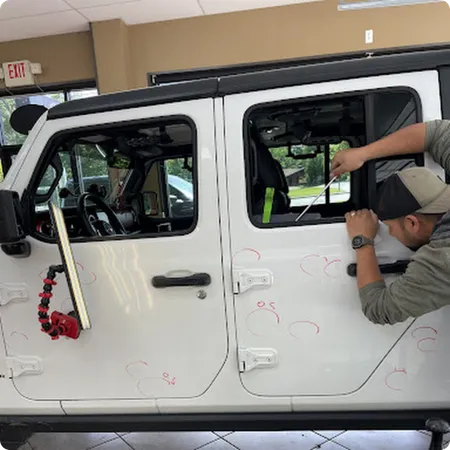
Paintless dent repair massages dented metal back to its original contour from behind the panel, using specialized rods and a lighting board that reflects lines across the surface so we can judge progress in real time. We access the damage through door gaps, trim removal, or interior points. Because the factory finish is never disturbed, most vehicles move through our shop in a fraction of the time conventional repainting would ever require.
Repair Times By Damage Severity
Minor damage like a few door dings or a handful of shallow dents is usually same day work, often finished in just an hour or two. These shallow, round dents are the ideal candidate for PDR since the paint remains intact and the metal has not stretched. You can frequently drop the car off in the morning and drive it home looking factory fresh that afternoon.
Moderate hail damage changes the equation. A vehicle with roughly 20 to 50 dents spread across the hood, roof, and trunk typically needs 1 to 3 days in the shop. Each dent is worked individually, and body line damage demands extra precision, running about an hour and a half per inch of affected contour. The more panels involved, the more careful hours the repair requires.
After a major storm, cars arrive with hundreds of dents covering nearly every panel. These repairs generally take 3 to 5 days, and sometimes longer when panels must be removed for better access or when deeper creases call for added finesse. When paint is chipped or glass is broken, conventional bodywork enters the picture and the timeline can stretch to two weeks or more.
The Full Timeline From Storm
The clock really starts the moment the storm passes. The typical Texas path runs: inspection and estimate in 30 to 60 minutes, then 2 to 5 business days for insurance processing, then your scheduled repair. Knowing each stage helps you set realistic expectations rather than guessing from the moment hail stops falling.
Documentation comes first. Photograph every panel in indirect natural light, since overcast or shaded conditions reveal dents far better than direct sun. Take wide shots for context and close ups of individual dents, chipped paint, and cracked glass. Include your license plate in at least one frame, and a video walk around is even better for showing the true scale of coverage.
From there the sequence flows: file your claim, let the adjuster inspect, confirm the estimate, schedule with us, complete the PDR work, pass a final quality check, and collect your keys. Reporting within 24 hours of the event dramatically improves both approval speed and settlement outcomes in today's Texas insurance climate.
Inside our shop, every repair follows the same disciplined stages. Inspection and estimate runs 30 to 60 minutes, or up to two hours for heavy hail, because we count dents panel by panel using a reflector board and specialized PDR mapping lights. Accessing the damage, whether through trim removal or panel disassembly, takes anywhere from 30 minutes to three hours. We identify remove and install items, inspect the glass, and review any ADAS components so nothing is overlooked before a single dent is touched.
The repair itself is where patience pays off. Pushing and massaging metal back to its factory contour can take two hours for light work or up to three days when the dent count climbs into the hundreds. Line boards and LED reflections let us pinpoint crowns and low spots with precision. Finally, a quality check and reassembly add 1 to 2 hours as we inspect every surface and reinstall panels to factory alignment, confirming the finish looks exactly as it did before the storm.
PDR Versus Traditional Body Shops
Speed is the clearest difference. PDR turnaround typically runs 1 to 3 days, while traditional bodywork stretches 3 to 14 days depending on scope. Most Texas hail specialists finish PDR in just 3 to 7 days, compared with the two plus weeks a conventional shop often needs when multiple panels require repainting, blending, and curing time.
The savings go beyond time. PDR preserves your factory paint, so there are no mismatched panels, no paint thickness irregularities, and no repainted panel flags on modern appraisals. Because no filler or repaint is involved, the repair leaves no record on your vehicle history report, and your factory corrosion warranty stays fully intact throughout the process.
Insurers tend to favor PDR for hail claims because preserving the original paint keeps costs down while restoring the vehicle to its pre damage condition. That alignment works in your favor: faster approvals, quicker scheduling, and a car that holds its resale value. Traditional repainting, by contrast, can trigger additional value deductions you will never recover.
What Shapes Your Specific Timeline
Severity and spread matter most. A hood with ten small dings is a very different job from a roof, hood, trunk, and both sides covered in damage. Minor damage might need only a few hours of PDR, while heavy coverage across many panels demands days of careful, methodical work.
Paint condition is the next deciding factor. When the finish stays intact and the metal has not stretched or creased, PDR is the preferred, faster method. If paint is chipped or metal is sharply creased, conventional filling, sanding, and repainting become necessary, which adds meaningful time to the overall repair process.
Scheduling backlogs and parts availability round out the picture. After a big storm, shops across Central Texas fill fast, and some owners wait months to book. Hidden damage under trim and braces may also surface during disassembly, requiring supplement approval, which we handle directly with your insurer on your behalf.
Hidden hail damage is more common than most drivers realize. Dents frequently hide beneath trim, roof rails, and structural braces where no estimate can spot them from the outside. As we carefully disassemble your vehicle, we often discover additional dents that were invisible during the initial inspection. Rather than slowing you down, we submit these as supplements directly to your insurer for approval, managing the entire back and forth so you never have to chase paperwork or second estimates.
This is exactly why it helps to have your PDR specialist present during the adjuster inspection. With an experienced eye and proper mapping lights at the appointment, fewer dents slip through, which means fewer supplements later and a smoother, faster path to completion. Remember that in nearly every state, including Texas, you have the legal right to choose your own repair facility. No insurer can force you into their preferred shop, so pick the specialists you trust.
Why Waiting Costs You More
Texas hail season peaks March through May with a second wave in fall, so delays are dangerous. If your car takes another hit before the first round is repaired, it becomes nearly impossible to attribute damage to individual storms, which complicates your claim. The more dents that accumulate, the higher the total estimate climbs, and what could have been a simple PDR fix can tip a vehicle into a total loss situation.
Time also works against your paint. Anywhere the finish has cracked or chipped exposes bare metal, and the heat and summer humidity across Texas accelerate rust far faster than most climates. Beyond the metal itself, most Texas policies carry a one year window to file a storm claim from the date of the event. Industry standard is to report within 30 days, and sooner is always better for approval and settlement.
The practical move is to act as soon as your claim is approved. Peak season scheduling fills quickly, and some policies set limits on how long you have to complete repairs after filing. Under Texas law, insurers must acknowledge your claim within 15 days, decide within 15 business days of receiving full information, and pay within 5 business days of acceptance. Starting early keeps that entire timeline moving in your favor.