





The Short Answer Explained
Yes, paintless dent repair can fix many bumper dents, but with clear exceptions. If a plastic bumper is dented or misshapen yet shows no cracked paint or torn plastic, we can often reshape it using controlled heat and glue pulling. When paint is cracked or the plastic is torn, conventional repair or replacement becomes the better path. It is important to know every bumper repair is an improvement, not a guaranteed perfect restoration.
Most modern bumpers are plastic covers over an energy absorbing structure, and plastic behaves very differently from metal. Steel panels have memory and want to return to shape, while plastic can deform, spring, and warp if handled without care. That is why our technicians rely on constant, controlled heat combined with careful outside pulling to coax plastic back toward its original form without cracking or stretching it further.
Metal Versus Plastic Bumpers
PDR is most effective on metal panels because they are more malleable and hold memory. Metal bumpers on older trucks, including chrome bumpers, can sometimes be corrected, though success depends on how deep the dent is, how reachable the backside is, and whether the metal has stretched. In those cases, results tend to be nearly invisible rather than flawless.
Plastic is far less forgiving. Technically PDR does not apply to plastic bumpers, yet a skilled technician can often reshape them with heat and controlled pressure. Proper pressure is everything here. Too much force cracks the plastic, while too little fails to move the dent. Results vary based on how far the plastic has stretched or warped during the impact.
There is a counterintuitive rule with plastic bumpers that surprises many drivers. Minor dents are actually harder to fix, and with plastic covers, the bigger the dent, the better the result tends to be. This is the reverse of what happens on a door panel, where small dings are ideal. Larger, softer deformations in plastic give our tools more area to work and reshape cleanly.
Why Dwell Time Matters
Dwell time, meaning how long a dent has been sitting on the bumper, significantly affects the outcome. Plastic tends to mold into its deformed shape over time, becoming more rigid and resistant to reshaping. Fresh damage responds far better to heat and pulling than a dent that has been ignored for months.
The longer a plastic bumper holds a dent, the harder it becomes to restore its original contour. Dents left unaddressed for long durations may never fully return without visible imperfections remaining in the surface. That stubborn memory in aged plastic is exactly why we encourage drivers to book an assessment promptly rather than waiting.
Paint age plays a role too. The older the finish, the more likely a repair struggles or fails outright, and paint beyond roughly ten years old is often far too brittle to survive manipulation. Addressing damage early protects both the plastic structure and the factory finish sitting on top of it.
Paint integrity is a genuine go or no go factor before we ever start. PDR works best on dents that have not cracked the bumper or removed paint, so we always examine the edges of the damage carefully. If the paint is intact and the surface simply pushed in, we have a strong candidate. When there are large white streaks from transfer contact with another object, there is very little PDR can do, because that damage lives in the finish itself rather than the underlying shape.
PDR also cannot repair very specific strikes, cuts, or gashes. If there is a small pushed in area combined with a major rash or significant paint loss, the paintless method is probably not the right choice, and honest guidance matters more than forcing a marginal repair. We would rather tell you the truth up front than deliver an outcome that disappoints. When paint damage is present alongside a dent, a conventional refinish or replacement usually produces the cleaner, more durable result you actually want.
When PDR Cannot Be Used
Some bumpers are simply beyond paintless repair. Once the plastic is ripped, or the clips that hold the bumper cover onto the vehicle have been torn away, the cover has to be replaced. For PDR to even be possible, the bumper must remain intact and unripped. A torn cover cannot be reshaped back into a secure, factory quality fit.
If damage is too extensive, with cracking through the cover or broken mounting clips, traditional body repair methods become necessary. Attempting PDR on structurally compromised plastic risks turning a fixable situation into a full replacement. Part of our job is recognizing that line early so you invest your money where it actually improves the vehicle.
Even a repairable bumper should only be repaired if the numbers make sense. A responsible shop weighs labor, materials, refinishing time, and hidden damage risk against the cost of replacing the cover and related parts. Sometimes reshaping wins, and sometimes replacement is smarter. We walk you through that comparison honestly before any tools touch your bumper.
ADAS Sensors And Modern Bumpers
Lorem ipsum dolor sit amet, consectetur adipiscing elit. Integer posuere pretium fermentum magna. Curabitur accumsan neque sit justo dictum, eros sem placerat arcu, non tincidunt nibh nulla ut sem.
Morbi dignissim sapien vel ipsum accumsan, in fringilla velit varius. Proin posuere nunc sed elit auctor, non molestie magna facilisis. Vestibulum laoreet magna imperdiet interdum, non tristique justo varius.
Maecenas tempor magna nec metus efficitur, vel placerat velit vulputate. Vivamus gravida semper elit eget tincidunt. Proin consequat luctus ipsum, non malesuada nunc ultrices vitae.
Newer vehicles embed radar, cameras, and parking sensors directly inside the bumper, which changes how any repair must be approached. Several manufacturers prohibit bumper repairs within the radar field of view, because those sensors create invisible keep out zones where radar transparency matters more than cosmetic straightening. Damage near a sensor pocket deserves extra caution, especially if a mount is broken or the impact shifted a radar element out of position.
When a sensor location moves during impact, any repair may need to be paired with ADAS calibration to keep your safety systems accurate. If the sensor pocket itself is badly distorted, replacement becomes the likely answer. This is a growing consideration across Texas, where hail is common and many drivers own late model vehicles packed with driver assistance technology. We factor these keep out zones into every plan before starting a modern bumper repair.
PDR Versus Body Shop Repair
The biggest advantage of paintless dent repair is preserving your original factory paint, which helps protect resale value. Because the process avoids sanding, filling, and repainting, it is faster, more affordable, and produces less waste than conventional bodywork. It also does not show up on a vehicle history report, which matters when you eventually sell. For the right dent, PDR delivers a superior, cleaner result than a traditional refinish.
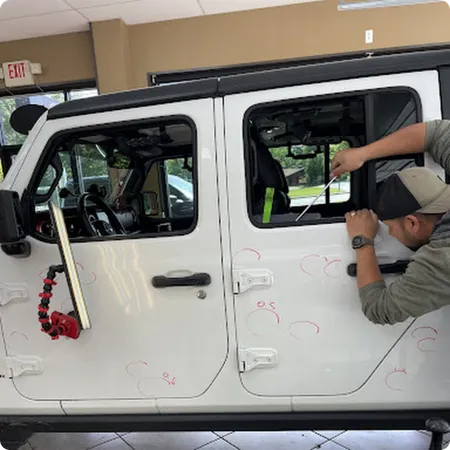
A typical bumper repair begins with assessment: the size, depth, and location of the dent, plus how long it has been present. Our technicians then access the backside of the cover, sometimes removing panels or working through existing openings, and apply constant heat to relax the plastic. Using rods, hammers, knockdowns, and glue pulling tabs, we massage the shape back gradually. Many bumper jobs finish in a fraction of the time a body shop needs.
Please avoid do it yourself fixes. Homemade solutions, boiling water tricks, and plunger methods are not only ineffective, they frequently worsen the dent and can make it unrepairable by PDR entirely. Front bumpers gather plate area creases, scuffs, and parking dents, while rear bumpers collect corner crushes and trim scuffs. Whatever your situation, an honest assessment tells you whether reshaping, refinishing, or replacement gives you the strongest, longest lasting outcome for your vehicle.