




Hail Repair Without Repainting
Can Hail Damage Be Repaired Without Repainting Your Car

FSDAVCFEBFEVSDDVFSD

FSDAVCFEBFEVSDDVFSD

FSDAVCFEBFEVSDDVFSD
What Hail Actually Does to Your Car's Panels
Hail leaves behind dozens of small dents that can look alarming at first. The good news is that many of those dents can be fixed without touching the paint at all. Paintless dent repair works by carefully massaging metal back to its original shape from behind the panel, leaving the factory finish completely intact. Understanding whether this method will work for your specific damage helps you make a smarter decision before booking any repair appointment.
Not every hail dent qualifies for a paint-free repair, though. The outcome depends on how deep the dents are, where they landed on the vehicle, and whether the paint has already cracked or chipped. In most hailstorm cases across East Texas, the paint holds up well, which means paintless repair is both possible and practical. A proper inspection is the only reliable way to know for certain what your car needs.
What Hail Actually Does to Your Car's Panels
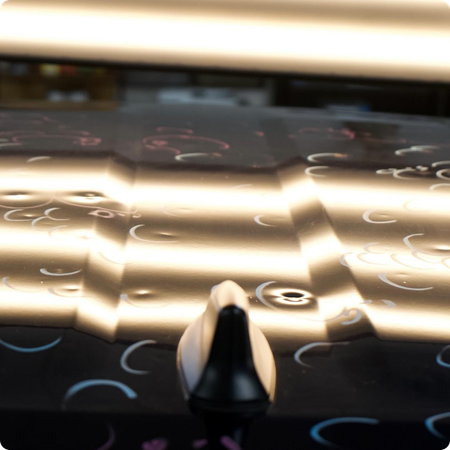
Hail leaves behind dozens of small dents that can look alarming at first. The good news is that many of those dents can be fixed without touching the paint at all. Paintless dent repair works by carefully massaging metal back to its original shape from behind the panel, leaving the factory finish completely intact. Understanding whether this method will work for your specific damage helps you make a smarter decision before booking any repair appointment.
Not every hail dent qualifies for a paint-free repair, though. The outcome depends on how deep the dents are, where they landed on the vehicle, and whether the paint has already cracked or chipped. In most hailstorm cases across East Texas, the paint holds up well, which means paintless repair is both possible and practical. A proper inspection is the only reliable way to know for certain what your car needs.
How Paintless Dent Repair Handles Hail Damage
The paintless process works because metal has memory. When a technician applies slow, steady pressure from behind a dented panel, the metal gradually moves back toward its original position. No heat, no filler, and no paint are involved. The tools used are thin rods and specialized picks that reach behind the panel through existing access points. The whole process relies on skill and patience rather than chemicals or coatings.
For this to work without disturbing the paint, the factory finish must still be bonded and flexible. Most modern vehicles have paint systems that hold up well to hail impact, especially smaller dents. If the paint has not cracked or separated from the metal, a trained technician can work the dent out without leaving any trace of damage behind.
This is exactly what makes paintless dent repair so practical for hail damage. A typical hailstorm produces many small, shallow dents spread across horizontal surfaces like the roof, hood, and trunk lid. These are precisely the kinds of dents that respond well to this method. When conditions are right, the finished repair is completely invisible.
When Repainting Actually Becomes Necessary After Hail
The most important factor is paint condition. If the paint over the dent is still fully attached and has no visible cracks, flaking, or chips, paintless repair is almost certainly on the table. Paint that has separated from the metal underneath cannot be saved by this method, and at that point, conventional bodywork with primer and paint would be required.
Dent depth matters just as much. Very shallow dents, even if there are dozens of them, are good candidates for this approach. Deeper dents that have stretched the metal significantly are harder to bring back without visible distortion remaining in the panel. A technician will assess the depth and shape of each dent before committing to a repair method.
Location on the vehicle also plays a role. Hoods, roofs, and trunk lids are generally easier to access with PDR tools. Pillars, body creases, and areas near door edges can be more difficult depending on how the vehicle is constructed.
When Repainting Actually Becomes Necessary After Hail
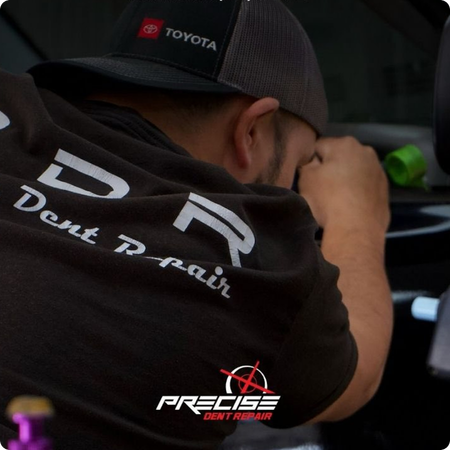
The most important factor is paint condition. If the paint over the dent is still fully attached and has no visible cracks, flaking, or chips, paintless repair is almost certainly on the table. Paint that has separated from the metal underneath cannot be saved by this method, and at that point, conventional bodywork with primer and paint would be required.
Dent depth matters just as much. Very shallow dents, even if there are dozens of them, are good candidates for this approach. Deeper dents that have stretched the metal significantly are harder to bring back without visible distortion remaining in the panel. A technician will assess the depth and shape of each dent before committing to a repair method.
Location on the vehicle also plays a role. Hoods, roofs, and trunk lids are generally easier to access with PDR tools. Pillars, body creases, and areas near door edges can be more difficult depending on how the vehicle is constructed.
Some hailstorms produce a mix of smaller and larger dents on the same vehicle. In those situations, a technician may be able to repair most dents without paint while addressing only the largest or deepest ones through conventional methods. This kind of combined approach helps keep costs down and reduces the amount of repainting required. The goal is always to preserve as much of the original factory finish as possible.
If you have been told a full repaint is necessary after hail damage, it is worth getting a second opinion from a shop that specializes specifically in paintless dent repair. General body shops sometimes recommend repainting because it is what they are set up to do, not necessarily because PDR was properly evaluated. A specialist can give you a clearer picture of what is actually needed based on the condition of your paint and the nature of the dents.
Does Paintless Repair Hold Up Over Time After Hail
This is where working with a specialist matters most. A shop that focuses specifically on paintless dent repair will assess your vehicle differently than a general body shop. They are looking at the paint condition, the dent profile, the panel access, and whether the metal has been overstretched. That evaluation shapes every decision that follows, including whether a full paint-free repair is realistic or whether some sections will need conventional work.
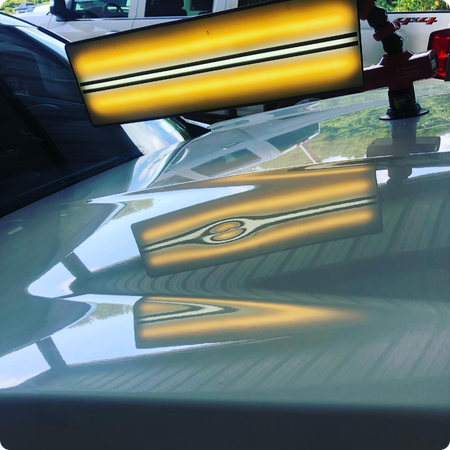
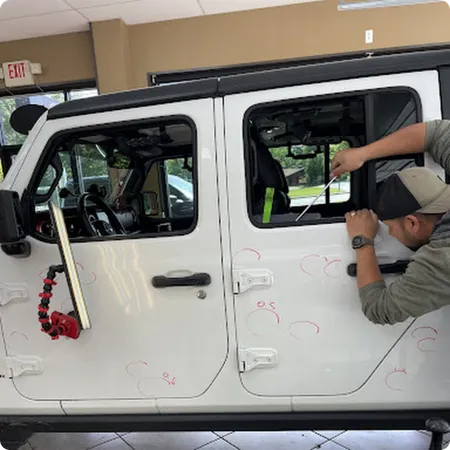
The inspection process itself is straightforward. A technician uses a specialized light board to cast shadows across the panel surface, which makes even small dents easy to see and measure. This same tool helps the technician track progress during the repair, so they can see exactly when the metal has returned to its correct position. It takes more time than eyeballing the panel, but the results are significantly more accurate.
At Precise Dent Repair, every vehicle gets a thorough inspection before any work begins. We walk you through what we find, explain which dents qualify for a paint-free approach, and give you a clear picture of the full repair scope. No surprises, no upsells, just honest information so you can decide what works best for your situation and your budget.
What to Expect When Getting Hail Damage Assessed
Yes, in most cases hail damage can be repaired without repainting, but the answer depends on a few conditions that only a hands-on inspection can confirm. The two main requirements are that the paint remains intact and that the dents are not too deep or structurally distorted. When both conditions are met, paintless dent repair is not just possible but is usually the faster and more affordable path.
When those conditions are not fully met, it does not automatically mean the entire vehicle needs to be repainted. Often, only the panels with the most severe damage require paint, while the rest of the vehicle can be addressed with paintless methods. A specialist will map out which areas fall into each category so the repair plan is as targeted and cost-effective as possible.
The key takeaway is that a general assumption about repainting is not good enough. Each vehicle and each storm is different.
Your insurance policy may cover hail damage repairs, and many policies include comprehensive coverage that applies to storm-related vehicle damage. When you file a claim, the insurance adjuster will document the dents and assign a repair value. That estimate does not always reflect what a paintless dent repair specialist would actually charge, so it is worth having your own assessment done separately.
Our team works with insurance claims regularly and can help you understand whether the adjuster's estimate lines up with the actual repair scope. If there are dents or damaged areas that were missed during the initial inspection, we can document those and communicate directly with the insurer on your behalf. The goal is to make sure the full extent of the damage is covered so you are not left paying out of pocket for repairs the storm caused.
Hail Damage Repair That Protects Your Factory Finish
If your car was hit by hail, the first thing worth doing is getting a proper assessment from someone who specializes in this type of repair. A general body shop may give you a quote that includes painting entire panels when that level of work is not actually needed. A paintless dent repair specialist evaluates the damage differently and can often restore the vehicle to its pre-storm condition without disturbing the original finish at all.
The longer you wait after a storm, the more complicated the process can become. Insurance claim windows have deadlines, and some policies require documentation within a specific timeframe. Getting an inspection done quickly puts you in the best position to move forward, whether you are filing a claim or paying out of pocket.
Our team serves Tyler, Longview, Lindale, and the surrounding areas of East Texas. If your vehicle took a hit in a recent storm, reach out to schedule an inspection. We will take a close look at the damage, walk you through your options, and give you an honest recommendation on the best path forward for your vehicle and your budget.
Precise Dent Repair
Paintless Dent Repair & Vehicle Hail Repair
Stay Current on Dent Repair
Get new articles on paintless dent repair and hail damage delivered straight to your inbox.
Stay Current on Dent Repair
Get new articles on paintless dent repair and hail damage delivered straight to your inbox.
Contact Info
Service Hours
Social Media
Mon-Fri: 8:00AM - 5:00PM
Saturday: Closed
Sunday: Closed



Licensed & Insured
Connect With Our Socials
Contact Info
Service Hours
Mon-Fri: 8:00AM - 5:00PM
Saturday: Closed
Sunday: Closed
Social Media
Licensed & Insured
©2026 Precise Dent Repair
Powered by: Customers Plus
Powered by: Customers Plus
Powered by: Customers Plus