





Coverage Follows The Cause, Not The Method
Here is the most important thing to understand about paintless dent repair and insurance: coverage depends on what caused the damage, not on the repair method itself. Insurers do not specifically approve or deny PDR as a standalone service. Instead, they cover the qualifying damage event, and PDR is simply one of the approved, cost effective methods used to correct that damage on your vehicle's panels.
That distinction matters when you file. If a covered event caused the dent and you carry the right coverage, PDR is typically an eligible fix. Insurers often prefer it because it is quicker and less costly, skipping labor heavy sanding and repainting while preserving your factory finish and resale value. Below, we break down exactly which coverage types apply, how deductibles work, and what to expect from the Texas claims process.
Which Coverage Types Apply To PDR
Comprehensive coverage is where most PDR claims land. It handles damage that did not involve colliding with another vehicle, including hail, falling objects like tree branches or acorns, vandalism, and even a runaway shopping cart. In Texas, comprehensive is optional and not part of the state minimum, but if you have a loan or lease, your lender almost certainly requires you to carry it.
Collision coverage pays to repair or replace your vehicle after an impact with another car or object. If you backed into a mailbox or another vehicle and left a dent without chipping the paint, PDR may qualify under collision as long as the impact was covered and the finish stayed intact. This is the coverage that answers for at fault or single vehicle contact damage.
Liability only policies are the exception. They only pay for damage you cause to other people and their property, so they will never cover dents on your own vehicle. If another driver dented your car, however, their liability insurance should pay for your repair. Standard policies also exclude minor cosmetic wear that develops simply from age, since no covered event triggered it.
How Your Deductible Changes The Math
Your deductible applies to paintless dent repair exactly as it would to any other covered auto repair. You pay that amount first, and insurance covers the balance. Because many door dings and small dents are relatively affordable to fix, the repair estimate can land below or right around a typical deductible, which changes whether filing makes sense.
If the estimate falls below your deductible, insurance pays nothing, and you are better off handling the repair directly. Even when an estimate sits slightly above the deductible, the modest payout may not justify putting a claim on your record. We are always happy to look at the damage first and give you a straight assessment before you decide.
Filing generally makes sense when the repair clearly exceeds your deductible, when hail or a storm caused widespread panel damage, or when another driver is at fault and their carrier should pay. For extensive damage, we can also help pursue a supplement so your insurer covers the full scope of the work.
Texas offers real protections worth knowing before you file. Your insurer cannot legally raise your premiums for weather related claims, so a hail claim will not push your rates up. You also have complete freedom to choose whichever repair facility you trust. Insurers often steer you toward shops with pre negotiated discount rates, but you are never legally bound to use them. That means you can bring your vehicle to a dedicated PDR specialist who works exclusively on this kind of damage, rather than a general body shop that may sublet the work.
The claims landscape shifted in 2026 under Texas House Bill 2067, which introduced digital filing requirements, percentage based deductibles, and stricter reporting windows. Filing sooner is now the gold standard for hail claims. Delays give insurers room to dispute damage as pre existing, and failing to provide prompt notice can complicate or even jeopardize your payout. While the general statute of limitations for property damage runs two years, your policy sets its own deadlines, which often demand prompt or immediate reporting. When in doubt, report fast and document everything.
When PDR Is Not The Right Fix
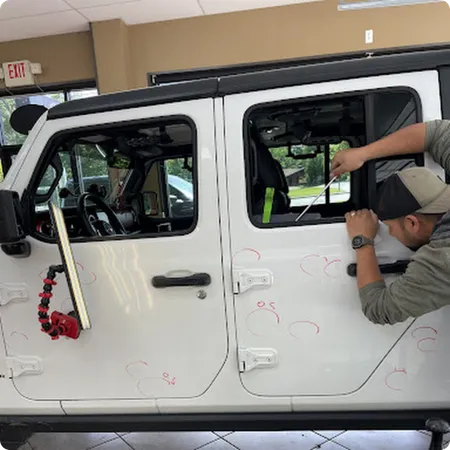
Insurance may cover the damage event, but PDR still has technical limits. The process works by applying precise pressure behind the panel, and sometimes by bonding a tab to pull a dent from the topside, all without disturbing the finish. That only works when the paint stays intact. Any chipped, cracked, or severely stretched surface pushes the job beyond what paintless methods alone can restore.
When a hail dent breaks the surface and exposes bare metal, we can still shape the panel with PDR, but the affected area will need repainting to finish properly. Deep dents, sharp creases, and heavily stretched metal often exceed paintless limits entirely, because stretched metal loses its ability to spring back to its original shape and usually requires conventional panel repair or replacement.
PDR is a cosmetic repair, not a structural one, so it cannot correct bent frames, misaligned panels, or anything affecting safety and performance. Aluminum panels demand extra bracing and crack more easily in inexperienced hands. Edge dents and zero access spots like roof rails and sealed door tops may not be reachable from behind. We tell you honestly when PDR fits and when it does not.
Filing Your PDR Claim Step By Step
Start by documenting the damage thoroughly. Inspect the vehicle in good light, note every dent, and take clear photos from multiple angles. If a hailstorm caused it, record the date, time, and location of the event. Solid documentation is your strongest tool if an adjuster later questions the timing or extent of the damage.
Report the claim promptly and open your file. Your insurer may send an adjuster to inspect the vehicle, confirm the extent of the damage, and verify that PDR is an appropriate, covered repair method. Because insurers recognize paintless repair as reliable and cost effective for qualifying dents, this step often moves faster than you might expect.
Once approved, the carrier issues payment or authorizes the repair. Confirm that the approved estimate actually matches the scope of work your vehicle needs. If the initial estimate falls short of the real damage, that is where a supplement comes in, and a trusted PDR shop can handle that conversation with your insurer directly.
Choosing us as your repair facility keeps the process clean. We work with the documentation and estimate your carrier provides, and if additional damage surfaces once we begin, we prepare a supplement request so the remaining cost is covered rather than coming out of your pocket. Because we focus entirely on paintless dent repair, hail repair, and door ding repair, we understand exactly what insurers look for and how to present the damage so your claim moves without unnecessary back and forth.
For a full comprehensive hail repair, the timeline is another reason insurers favor PDR. Since there is no painting, priming, or drying, most hail jobs finish in a matter of days rather than the weeks a repaint would require, with severity determining the exact turnaround. Smaller single dent repairs often wrap up the same day. Faster repairs mean less time without your vehicle and a smoother experience from the first photo to the final panel.
Frequently Asked Questions About Coverage
Will filing a hail claim raise my rates in Texas? No. Texas law prohibits insurers from increasing your premiums for weather related claims, so a hail claim will not raise what you pay. This protection is one reason so many Texas drivers choose to file promptly after a storm. Just remember that prompt notice matters more than ever under current filing rules, so do not sit on visible hail damage waiting to see what happens.
Can I pick my own repair shop, or must I use one my insurer suggests? You choose. Under Texas law you have complete freedom to use whichever facility you trust. Insurers frequently recommend shops on their preferred networks that have agreed to discounted rates, but you are not obligated to use them. Selecting a dedicated paintless dent repair specialist ensures the work is done by technicians who repair dents every day rather than as a side service.
Could my car be declared a total loss over dents? It is possible with severe, widespread hail. In Texas, carriers typically total a vehicle when repair costs exceed its actual cash value, though some use lower thresholds around 75 to 80 percent. Because PDR is far less expensive than traditional bodywork, choosing it often keeps a repair estimate below the total loss line, which can save an otherwise repairable vehicle from being written off.